What Should Be in a Mumbai Housing Society’s Annual Waterproofing Maintenance Contract (AMC)?

# What Should Be in a Mumbai Housing Society’s Annual Waterproofing Maintenance Contract (AMC)?

Most housing societies sign a waterproofing AMC that covers one inspection visit and a bucket of sealant, then act surprised when the terrace starts leaking again in June. If your annual maintenance contract for waterproofing does not spell out pre-monsoon inspections, emergency response times, and ongoing monitoring, you are paying for a service visit, not protection. Here is what a proper waterproofing AMC should include for a Mumbai housing society.

## What a Waterproofing AMC Actually Covers

A waterproofing annual maintenance contract is not the same as a one-time repair job. A one-time repair fixes a specific leak and walks away. An AMC is a year-long relationship where the contractor is responsible for keeping your building dry across all seasons, especially the Mumbai monsoon from June to September.

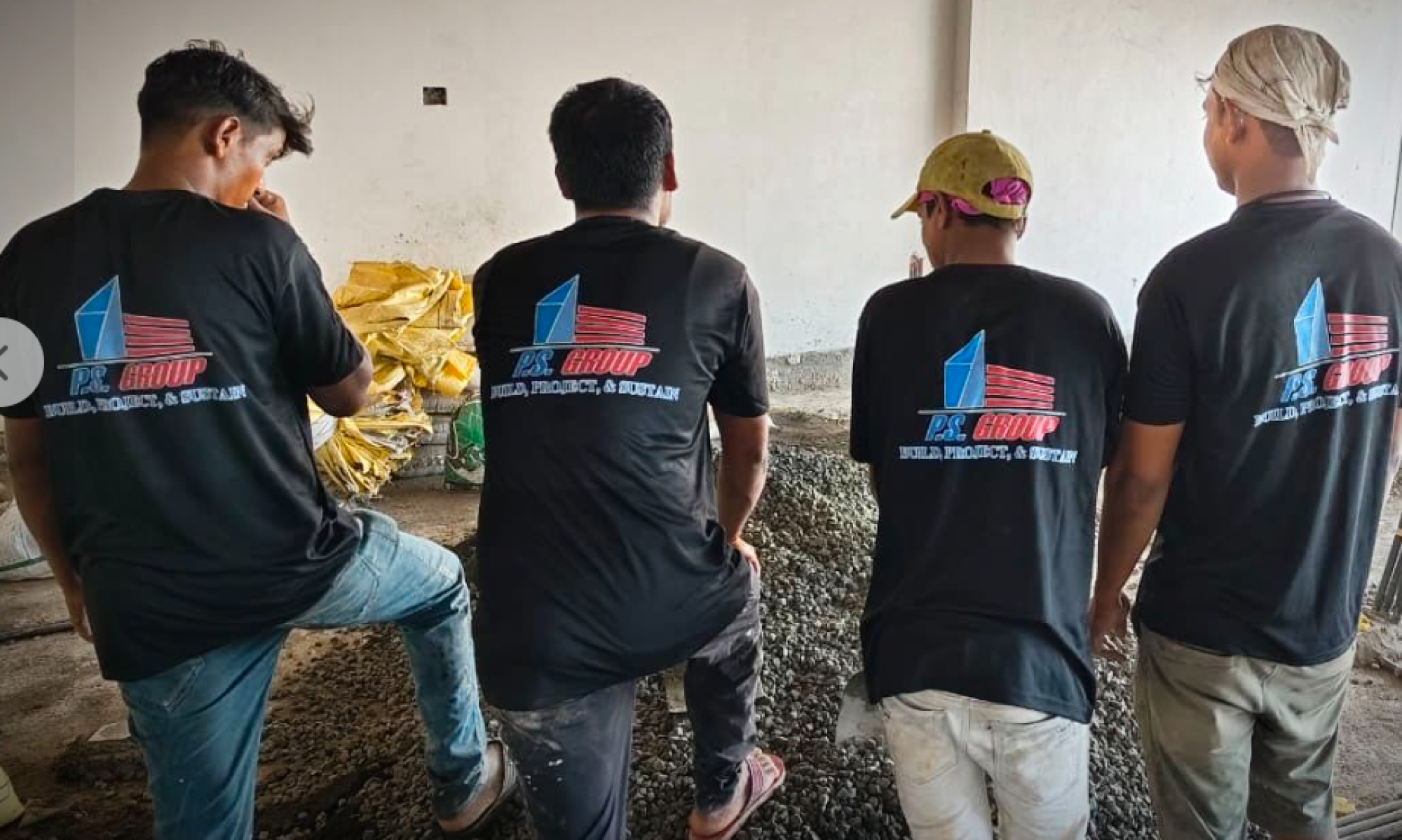
PS Group (formerly PS Civil) has been maintaining buildings across Mumbai since 2007. Their PS Protect Plan is built around the idea that waterproofing is not an event but a cycle. The Arabian Sea salt air, the monsoon downpour, and the thermal expansion from Mumbai’s summer heat all work on your building 365 days a year. Your AMC should reflect that.

At minimum, your AMC should include a pre-monsoon inspection, post-monsoon assessment, emergency callout service during the rains, and periodic monitoring of vulnerable areas like terraces, parapets, and expansion joints. If your AMC only covers one annual visit, it is not maintenance. It is an inspection dressed up in a contract.

## Pre-Monsoon Inspection: The Backbone of Any AMC

The pre-monsoon inspection is the single most important part of a waterproofing AMC. Mumbai gets its first heavy rain in early June, sometimes late May. Your inspection should happen in March or April at the latest.

During this inspection, the contractor should check terrace slopes for water pooling, inspect drain outlets for blockages, examine parapet wall joints for hairline cracks, and check the condition of existing waterproofing membranes. If your building has a basement or podium parking, the inspection should extend to those areas too.

A proper pre-monsoon report should be handed to the society secretary in writing. Not a verbal “looks fine.” A documented checklist with photographs, identified risk areas, and recommended actions before the rains arrive.

## Emergency Response Time: What Your AMC Should Promise

This is where most AMC contracts fall apart. The monsoon does not wait for business hours. A terrace leak at 2 AM during a July downpour is an emergency. Your AMC should specify a maximum response time for monsoon-related leaks.

PS Group guarantees emergency response as part of their PS Protect Plan, because they know a delayed response during the monsoon means damaged ceilings, ruined paint, and angry flat owners at the next AGM.

When negotiating your AMC, ask these questions:

1. What is the maximum response time for emergency leak calls during the monsoon (June to September)?
2. How many emergency visits are included in the contract without extra charges?
3. Is there a 24/7 helpline or only office-hours support?
4. What temporary measures will the contractor provide if a permanent fix is not possible during active rain?

If your AMC does not answer these four questions in writing, you do not have emergency coverage. You have a phone number to call.

## What Most AMC Contracts Miss (And What That Costs You)

Most waterproofing AMC contracts in Mumbai miss three critical things.

First, they do not include a post-monsoon assessment. After the monsoon ends in September, your building has taken four months of punishment. Walls are holding moisture, membranes may have developed hairline cracks, and drain outlets may be partially blocked. A post-monsoon check catches problems before they become next year’s emergency. If you have not yet waterproofed after this monsoon, read about when to schedule it [here](https://pscivilbusiness.wordpress.com/2026/09/01/when-is-the-best-time-to-waterproof-a-building-in-mumbai-after-the-monsoon/).

Second, they do not cover thermal imaging or moisture mapping. A visual inspection cannot detect water trapped inside walls or under terrace tiles. Thermal imaging finds hidden moisture paths that will surface as seepage in the next monsoon. Without it, your AMC is reactive, not preventive. Learn more about how this works at the [PS Leak Detect page on pscivil.com](https://pscivil.com/index.php?page=leakdetect).

Third, they do not define what “covered areas” means. If your AMC says “terrace waterproofing” but does not list the parapet walls, expansion joints, drain outlets, and duct shafts, your contractor can claim those are not part of the contract. Every covered area should be listed explicitly with measurements.

## Why AMC Beats Reactive Repairs Every Time

Reactive repair means calling a contractor after the leak happens. By then, your ceiling is stained, your paint is peeling, and your flat owner is threatening to deduct it from maintenance. You are also paying emergency rates during peak monsoon demand when every contractor in Mumbai is slammed.

An AMC front-loads the cost into a planned contract, schedules work during dry months, and keeps a relationship active so the contractor already knows your building when the emergency hits. It is the difference between having a doctor on call and going to the emergency room.

Under the Maharashtra Co-operative Societies Act, the managing committee is responsible for maintaining the building’s structural integrity including waterproofing. An AMC is your documentation that the society is fulfilling this duty. Without it, a leak-related dispute at the next AGM or a complaint to the Deputy Registrar becomes harder to defend.

## What to Do Next

If your society’s current AMC is just a yearly visit with no emergency clause, no post-monsoon assessment, and no moisture mapping, it is time to upgrade. Ask for a site visit where the contractor inspects your building and proposes a structured AMC with documented coverage.

PS Group offers the PS Protect Plan, their waterproofing AMC designed specifically for Mumbai housing societies. It covers pre-monsoon and post-monsoon inspections, emergency monsoon response, moisture mapping, and documented reporting so your AGM has answers, not excuses.

[Get a site assessment from PS Group](https://pscivil.com/index.php?page=waterproofing) or message them directly on [WhatsApp](https://wa.me/919768416600) for an AMC proposal tailored to your building.

You can also see their waterproofing work on [YouTube](https://www.youtube.com/@the_psgroup) and follow their latest project updates on [Facebook](https://www.facebook.com/pscivilwork/).

#WaterproofingMumbai #HousingSocietyMumbai #AnnualMaintenanceContract #WaterproofingAMC #AMC #PSGroup #PSWaterproofing #PSCivil #MonsoonPrep #MumbaiMonsoon #BuildingMaintenance #CooperativeSociety #PreMonsoonInspection #SeepageSolution #WaterLeakage #TerraceWaterproofing #LeakageMumbai #PSProtectPlan #FlatOwnerMumbai #SocietyMaintenance

Why Is My Bathroom Ceiling Wet After Rain Even When the Flat Above Has No Visible Leak?

Why Is My Bathroom Ceiling Wet After Rain Even When the Flat Above Has No Visible Leak?

A wet bathroom ceiling after Mumbai rain does not always mean the flat above is leaking, even when the problem appears directly below its bathroom.

This is a common complaint during the June to September monsoon, especially in older buildings in Andheri, Borivali, Thane, Navi Mumbai and South Mumbai. Water can travel through concealed plumbing lines, a terrace slab, an external wall or a crack in the building before it finally shows up as a damp patch on your ceiling. That is why breaking tiles in the flat above as the first step can leave both families with damage and no proper answer.

What causes a bathroom ceiling to become wet after rain?

Rainwater follows gravity, but it also moves sideways through concrete, plaster joints and service ducts. The visible patch is often the end point, not the source. Common paths include:

  1. Terrace or slab seepage: Rain enters through failed waterproofing, open cracks, damaged rainwater outlets or weak parapet junctions. It then travels through the slab and appears in a top-floor or upper-level bathroom.
  2. External wall seepage: Driving rain can enter through cracks in external plaster, window edges, pipe sleeves and areas where the facade meets a toilet wall. Mumbai’s salt-laden coastal air can speed up deterioration of exposed surfaces.
  3. Concealed plumbing leakage: A supply line, waste pipe or joint inside the upper flat may leak only when that fixture is used. This can be intermittent and may not leave a visible mark in the flat above.
  4. Common service shaft leakage: Soil pipes, rainwater pipes and ducts pass through multiple flats. A defect higher up can make the ceiling below look like an inter-flat bathroom dispute.

How can you find the source without breaking tiles?

Start with a record of when the dampness appears. Does it worsen only after heavy rain, after the upstairs bathroom is used, or throughout the day? Note the size of the patch, the smell, paint bubbling, salt deposits and whether water is near a light fitting. Switch off the affected circuit if water is close to electrical points and arrange an electrician’s inspection before using that fitting.

A proper inspection then compares moisture readings in the affected ceiling, nearby walls, the flat above, the terrace and accessible service areas. Moisture mapping helps show whether the wet area is spreading from a plumbing route or from the building envelope. Thermal imaging can help identify temperature differences associated with trapped moisture, while a visual inspection checks cracks, pipe joints, waterproofing terminations and drainage points.

These methods do not mean every leak can be solved without opening anything. They mean opening is guided by evidence rather than guesswork. For concealed leakage diagnosis in Mumbai, see the PS Leak Detect service.

Why breaking tiles in the flat above may be the wrong first step

Tiles can be removed and replaced, but that does not prove where water entered the building. If the actual path is an external wall, terrace or common shaft, breaking the upstairs bathroom may create a second repair problem while the original seepage continues.

It can also turn a technical issue into a neighbour dispute. The upstairs resident may insist that their floor is dry, while the downstairs resident sees a growing stain. Both observations can be true because water may travel inside the slab before appearing elsewhere.

A written diagnosis should identify the inspected areas, readings or observations, likely source, limitations and recommended next step. If the evidence points to a terrace or external surface, the society committee may need to coordinate access and repairs. The waterproofing scope can be reviewed through PS Group’s waterproofing services, while damage to concrete, plaster or exposed building elements may require PS Civil repair work.

Who should inspect the leak in a Mumbai housing society?

Begin with the flat owner’s own fixtures and visible plumbing, then involve the upstairs resident and the society committee without assigning blame. Society bye-laws and the building’s approved maintenance responsibilities may matter when the suspected source is a terrace, facade, rainwater pipe or common duct. If the building is under a developer-related defect period, keep photographs, inspection notes and written complaints for the society’s records and take appropriate advice under the applicable RERA and Maharashtra housing rules.

During the monsoon, do not wait for the patch to become dramatic. Repeated wetting can damage paint and plaster, corrode reinforcement where concrete is affected, encourage mould and create an electrical safety risk. A temporary bucket or fresh coat of paint only hides the symptom.

What should you do today?

  1. Photograph the ceiling and mark the date and weather conditions.
  2. Check whether the patch changes after rain or after bathroom use upstairs.
  3. Keep electrical fittings away from use if water is nearby.
  4. Ask for a source-focused inspection before approving tile breaking.
  5. Share the written findings with the flat owners and society committee.

PS Group (formerly PS Civil) can help separate a concealed plumbing issue from terrace, facade and common-area seepage through a structured inspection. You can message PS Group on WhatsApp with photographs and your location, or use the contact page to request a site visit.

For practical demonstrations and building repair updates, visit PS Group on Instagram. The right diagnosis before the first tile is broken can save time, reduce neighbour arguments and point the society toward the repair that actually stops the water.

#BathroomLeakage #SeepageSolution #WaterLeakage #LeakDetectionMumbai #ThermalImagingMumbai #HousingSocietyMumbai #FlatOwnerMumbai #CooperativeSociety #PSGroup #PSLeakDetect #PSWaterproofing #PSCivil #PSDesignStudio #MumbaiMonsoon #MonsoonPrep #BuildingMaintenance #MumbaiWaterproofing

BMC Notice for Building Repair in Mumbai: What It Means and What Your Society Must Do Within 30 Days

What Is a BMC Repair Notice and Why Did Your Building Get One?

Every year before and during monsoon, the BMC (Brihanmumbai Municipal Corporation) surveys buildings across Mumbai and classifies them by structural condition. If your building shows signs of deterioration like spalling concrete, cracked beams, loose external plaster, or exposed reinforcement, the BMC issues a notice under Section 353 of the Mumbai Municipal Corporation Act, 1888.

The notice tells your society that the building has structural defects and must be repaired, or in extreme cases, vacated. The classification the BMC assigns determines everything that happens next.

C1, C2, C3: What Category Did Your Building Get Tagged With?

The BMC uses a four-tier classification system:

C1 (Dangerous): The building is beyond repair and must be vacated and demolished. Residents must leave within the timeline specified in the notice. No repair work is permitted. The society must initiate redevelopment.

C2A (Major Structural Repairs): The building has serious structural damage but can be saved with major civil work. This includes RCC jacketing, beam and column repair, slab strengthening, and full facade restoration. The society must carry out these repairs within the timeline given, typically 30 to 90 days from the notice date.

C2B (Non-Structural Major Repairs): The building needs significant repairs that are not structural in nature, such as external plaster redo, waterproofing of terrace, and plumbing line replacement. Less urgent than C2A but still has a compliance deadline.

C3 (Minor Repairs): The building needs routine maintenance. Patch repairs, minor plaster work, painting. No immediate danger, but the society should complete these before the next monsoon.

The category your building received changes everything. If you do not know which one, the first thing your secretary should do is read the notice carefully and identify the classification.

What Your Society Must Do Within 30 Days

If your building received a C2A or C2B notice, the clock starts immediately. Here is the step-by-step your managing committee should follow:

1. Call an emergency General Body Meeting (GBM) within 7 days. The notice must be tabled before all members. The committee cannot decide this alone. Under the Maharashtra Cooperative Societies Act, 1960, major repair decisions require a resolution passed in a GBM with a simple majority.

2. Hire a structural engineer for a fresh audit. Do not rely solely on the BMC survey. Get an independent structural assessment from a licensed structural consultant. This gives you a documented scope of work and protects the committee if there is a dispute later.

3. Get repair quotes from specialist contractors. Do not call a general painter or local mason. C2A repairs involve RCC work, structural crack stitching, and spalling concrete repair. You need a contractor who understands structural repair, not just waterproofing or plaster. PS Group’s PS Civil division handles exactly this kind of work across Mumbai.

4. Submit a compliance report to BMC. Within the timeline in the notice (usually 30 days), the society must submit a written compliance report to the ward office stating what repairs have been planned, which contractor has been appointed, and the expected timeline for completion. If you miss this, the BMC can escalate.

5. Begin repairs immediately after approval. Do not wait for the full monsoon to end if the notice says urgent. Some repairs like external plaster and structural crack stitching can and should be done during dry windows in the monsoon itself.

What Happens If Your Society Ignores the Notice?

This is where it gets serious. If your society fails to respond or act within the given timeline, the BMC can:

  • Issue a second notice with a shorter deadline
  • File a case in the Metropolitan Magistrate Court under Section 475A of the MMC Act, which carries fines and potential imprisonment of office bearers
  • Disconnect water and electricity supply to the building in extreme cases
  • Force evacuation if the building is classified C1

Beyond the BMC, if a resident or flat owner is injured due to structural failure that the society knew about but did not fix, the managing committee members can be held personally liable under civil and criminal law. This is not a theoretical risk. It has happened in Mumbai.

How PS Group Helps Societies Respond to BMC Notices

When your society receives a BMC repair notice, you need three things: a structural assessment, a clear scope of work, and a contractor who can execute to the standards the BMC expects.

PS Group starts with a full building inspection. We identify what the BMC notice requires, assess the actual structural condition (which is often worse than what the BMC survey caught), and prepare a repair plan that addresses the root cause, not just the visible symptoms.

For C2A buildings, our PS Civil team handles RCC repair, spalling concrete treatment, structural crack stitching, and facade restoration. For C2B buildings, we handle external plaster, terrace waterproofing, and structural crack repair. We coordinate with your structural engineer and provide the documentation you need for your BMC compliance report.

If your building is in a post-monsoon damage situation and the BMC has already classified it, do not wait for the deadline to approach. The earlier you start, the more time your contractor has to complete the work before the next monsoon cycle.

Questions Every Committee Member Should Ask Before Hiring a Contractor

  1. Have they done structural repair work in Mumbai housing societies before? Ask for references from buildings 15+ years old.
  2. Do they provide a written scope of work specifying materials, method, and warranty? If they quote verbally and want to start next week, walk away.
  3. Will they coordinate with your structural engineer and submit documentation for the BMC compliance report? A contractor who cannot provide paperwork will leave your society non-compliant.
  4. Do they test their work? Flood testing for waterproofing, rebound hammer testing for concrete strength, and post-repair thermal scans should be part of the package.

You can see examples of our structural repair projects on our gallery page and follow ongoing work on our YouTube channel.

Your Next Step

If your society has received a BMC repair notice, the single most important thing is to not delay. Call a GBM this week, get a structural assessment, and start getting quotes. The 30-day window goes fast, and the BMC does not accept “we could not find a contractor” as a reason for non-compliance.

PS Group can help you with the full process, from structural assessment to repair execution to BMC compliance documentation. Contact us here or message us directly on WhatsApp and we will schedule a site visit within 48 hours.

Follow us on Instagram and LinkedIn for more housing society repair guides throughout the monsoon season.

How to Find the Source of Bathroom Leakage Without Breaking a Single Tile

Most Mumbai flat owners face the same nightmare — water seeping through the ceiling, and every contractor who shows up says the same thing: we need to break tiles to find the source.

That is the old way. There is a better way now, and housing society secretaries across Mumbai are starting to insist on it before any repair work begins.

The Problem With Breaking Tiles to Find a Leak

When water appears on a ceiling, the instinct is to go up — break open the bathroom floor of the flat above, investigate, and find the source. In theory, logical. In practice, this approach has three serious problems.

First, the source of a leak is rarely directly above where the water appears. Water travels along rebar, pipe runs, and slab gradients before it drops. Breaking tiles directly above the stain often finds nothing — because the entry point is a metre away or more.

Second, once tiles are broken, they need to be replaced. If the wrong area was opened, the resident above has a damaged bathroom and the leak is still unresolved. Now both flat owners are unhappy, the society is in the middle, and nobody has actually fixed anything.

Third — and this is the part that matters legally — the Maharashtra CHS Act places responsibility for repair on whoever caused the leak. If you cannot prove where the leak originated, no one accepts responsibility. The dispute drags on for months.

How Thermal Imaging Leak Detection Actually Works

Thermal imaging leak detection — the method used by PS Leak Detect — works on a simple principle: wet concrete and masonry hold temperature differently from dry material. A thermal camera detects these temperature differences on the surface of walls, floors, and ceilings and maps them into a visual image.

Areas with active moisture show up as distinct thermal anomalies. A trained thermographer reads these maps and identifies exactly where water is present, how far it has spread through the structure, and — critically — which direction it is travelling from.

No tiles are broken. No walls are opened. No guessing.

The scan typically takes under two hours for a standard flat. What you receive afterwards is a written report with annotated thermal images, a clear statement of where the moisture is concentrated, a probable source identification, and a recommended repair scope. That report is objective documentation — it holds up in a society committee meeting, and it holds up in the Cooperative Court if the dispute escalates.

When Thermal Imaging Is the Right First Step

Use it when you can see leakage but cannot identify the source. Use it when the flat owner above denies responsibility and you need objective proof of where the water is coming from. Use it when a previous repair has been done but the stain has returned — the repair addressed the symptom, not the source. Use it before purchasing a resale flat in Mumbai — moisture mapping reveals hidden damage that no visual inspection will catch.

Society secretaries: this is also the tool that ends the “it’s from above” versus “no, it’s from below” deadlock. Thermal imaging produces documented, visual evidence. It removes opinion from the equation entirely.

Why Society Secretaries Should Insist on a Scan Before Any Repair Is Approved

Under the Maharashtra Co-operative Societies Act, the managing committee has the authority to direct flat owners to carry out repairs — but only when the source and responsibility are established. A thermal imaging report gives the committee that evidence cleanly and quickly, without involving contractors breaking tiles in both flats on the assumption that one of them must be right.

The cost of a scan is a fraction of the cost of a wrongly directed repair — and far less than a Cooperative Court filing. PS Leak Detect covers all of Mumbai and MMR. Most inspection bookings are fulfilled within 48 hours.

Watch how a thermal imaging scan works in a real Mumbai building on the PS Group YouTube channel. You can also see project documentation on Facebook and connect with Sanjay Parmar directly on LinkedIn.

The PS Leak Detect Scan Process

Every scan follows the same four steps:

Inspect: Site history, usage patterns, previous repair attempts, exposure conditions. This context shapes how the thermal data is interpreted.

Scan: Professional thermal imaging of the affected area — walls, ceiling, floor, and adjacent areas where water may have travelled.

Analyse: Expert interpretation of the thermal map. Not just colourful images — a clear explanation of what each anomaly means and what caused it.

Report: Written diagnosis with annotated thermal images, root cause identification, and repair direction. This is what you take to the committee, the contractor, or the court.

No broken tiles. No guessing. No surprises.

To book a PS Leak Detect scan or learn more about how thermal imaging works for Mumbai housing societies, visit pscivil.com/leakdetect, call +91 97684 16600, or WhatsApp us directly. If your society is dealing with a waterproofing issue alongside the leak, see pscivil.com/waterproofing for our full terrace and structural waterproofing systems.

#WaterproofingMumbai #LeakDetectionMumbai #ThermalImagingMumbai #BathroomLeakageSolution #HousingSocietyMumbai #MumbaiMonsoon #SeepageSolution #LeakDetect #MumbaiFlat #WaterLeakage #PSGroup #PSLeakDetect #MonsoonPrep #BuildingMaintenance #FlatOwnerMumbai #CooperativeSociety #NoBrokenTiles #ThermalImaging #MumbaiBuilding #WaterproofingContractor

Why Terrace Waterproofing Fails in Mumbai Before the First Rain Even Hits

Why Terrace Waterproofing Fails in Mumbai Before the First Rain Even Hits

Every June, at least three societies call us after their freshly waterproofed terrace starts leaking — and the work was done just eight months ago.

This is not bad luck. It is not the monsoon being unusually harsh. It is a pattern we have seen across 2,000+ projects in Mumbai, and it almost always comes down to the same set of mistakes made before the rain arrives.

If your society’s managing committee is thinking about terrace waterproofing Mumbai monsoon preparation 2026, this post will save you time, money, and a lot of frustrating phone calls to your previous contractor.

Why Terraces in Mumbai Are Different From Any Other City

Mumbai does not get rain. It gets assault.

The southwest monsoon hits the city with an average of 2,400mm of rainfall between June and September — much of it in concentrated downpours in a single day. Add to this the salt-laden sea breeze from the Arabian Sea that accelerates concrete degradation, and you have a surface environment that is genuinely punishing.

A terrace membrane that works fine in Pune or Delhi will fail in Andheri or Chembur within two seasons. Terrace waterproofing in Mumbai requires materials and application methods calibrated for this specific climate — not generic solutions sourced from a builder’s merchant in a dry month.

This is why PS Group’s research and procurement team tests all materials specifically under Mumbai climate simulation before approving them for site use.

The 6 Reasons Terrace Waterproofing Fails in Mumbai

1. Wrong Application Season

The single most common reason for early failure: the waterproofing was applied in October, November, or December after the monsoon, on a surface that had absorbed months of water and never fully dried.

Our tested waterproofing membranes require the concrete substrate to be genuinely dry before application. After a Mumbai monsoon, terrace slabs can hold residual moisture for many weeks depending on exposure and slab thickness. Applying membrane on a wet substrate means it will debond within one season.

The correct window for terrace waterproofing work in Mumbai is February to April — after winter dryness has cured the slab and before pre-monsoon humidity climbs.

2. Skipping the Crack Survey

Mumbai buildings settle. Old buildings settle more. Even a structure that is over a decade old will have hairline cracks running through the terrace slab that are invisible to the naked eye from ground level but are highways for water ingress.

Any waterproofing job that does not begin with a thorough crack survey — including core drilling at suspected weak points — is applying a cosmetic layer over a structural problem. The water will find the crack. It always does.

Before any membrane goes down on a PS Group site, our team maps every visible crack, fills them with PS Group approved injection grout, and allows full cure time. Only then does membrane application begin.

3. Parapet Wall Neglect

Ask most waterproofing contractors where the terrace membrane needs to go and they will say the floor. Correct, but incomplete.

The parapet wall junction is the most vulnerable point on any Mumbai terrace. Water pools at the wall base during heavy rain. The wall-to-slab joint is a cold joint in the concrete — always the first place a crack forms as the building expands and contracts through temperature cycles.

Our system requires the membrane to turn up the parapet wall to a minimum height of 300mm and terminate with a cover fillet sealed against the wall face. Skipping this step is like waterproofing a bathtub but leaving the top inch of every side open.

4. Drainage Points Blocked or Too Few

A terrace with poor drainage turns every heavy shower into a temporary pond. Standing water applies hydrostatic pressure on every joint and seam in your membrane system.

BMC building bye-laws specify minimum drainage outlet requirements for flat roofs. Outlets must be checked and cleared before every monsoon — blocked outlets are the fastest way to turn a good waterproofing system into a failed one.

We assess drainage capacity as part of every terrace inspection. If your outlets are undersized for your terrace area, we will tell you before we touch the membrane.

5. Single-Layer Application Where Multiple Layers Were Needed

There is no one-size-fits-all answer to how many layers of waterproofing a Mumbai terrace needs. It depends on the age of the building, the condition of the existing slab, whether there is foot traffic on the terrace, and whether the space below is a habitable room or a service area.

PS Group uses a layered approach — starting from a primer coat to consolidate the substrate, moving to a base membrane layer, followed by a reinforcement fabric layer at all joints and junctions, and finishing with a top coat rated for UV and foot traffic where required. For terraces above bedrooms or living areas, we add an additional protection board before any final finish.

Contractors who offer “one coat, guaranteed for 10 years” are offering you a phrase, not a system.

6. No Post-Application Flood Test

The only way to know a waterproofing application has worked is to simulate rain before the actual rain arrives. This means ponding the terrace — filling it with 50mm of water for a minimum of 24 hours — and checking the ceiling of every room below for any seepage.

Most contractors skip this step because it adds a day and exposes any mistakes they made. A responsible waterproofing contractor insists on it. At PS Group, the flood test is mandatory. If the test reveals a weak point, we fix it before the job is signed off.

What Terrace Waterproofing Mumbai Monsoon Preparation 2026 Should Actually Look Like

If your society’s managing committee is planning work this season, here is the realistic timeline:

Now (May): Get a professional inspection done. A proper inspection — not just someone walking the terrace and looking — should include checking the parapet junction, mapping existing cracks, testing existing membrane for delamination, and assessing drainage capacity.

Immediately: If the inspection reveals active cracks or delaminated membrane, begin crack grouting now. This can be done even with moderate pre-monsoon humidity and provides immediate protection even before full waterproofing work begins.

Monsoon (June–September): Emergency repairs only if needed. Full membrane application cannot happen in this period. Use this time to document every leak precisely — photos, timestamps, the exact area of the ceiling that stains — so repair work in October onwards is targeted, not guesswork.

Post-monsoon (October–November): Wait several weeks after the last significant rain. Then begin full terrace waterproofing works with flood testing before sign-off.

Next pre-monsoon (February–April 2027): Annual inspection to check membrane, drainage, and parapet junction. Catch anything small before it becomes a significant repair.

A Word on RERA and Defect Liability

If your building was handed over by a developer within the last 5 years, RERA’s defect liability clause under Section 14(3) of the Maharashtra RERA Act places responsibility for structural defects — including waterproofing failures — on the developer for 5 years from possession date.

Many managing committees do not know this, or are told by the developer that leakage is a maintenance issue rather than a structural defect. It is worth getting legal clarity before spending society funds on work that should be the developer’s responsibility.

For buildings outside the RERA window, the cost falls on the society — which is why budgeting for terrace waterproofing in your annual maintenance fund matters. The right budget depends on your building’s age, terrace area, current membrane condition, and access — get a proper site assessment before provisioning funds.

When to Call PS Group

If your terrace was waterproofed more than 7 years ago, or if you are seeing ceiling stains in top floor flats despite previous repair work, the right first step is a diagnostic inspection — not a quote for new waterproofing.

We will tell you honestly what the slab condition is, whether a repair will hold or whether a full system replacement is needed, and what timeline makes sense for your specific building. We do not quote for work that is not warranted.

You can see our work on the PS Group YouTube channel — including real terrace flood tests on Mumbai buildings. Follow us on Facebook for pre-monsoon tips through the season.

Call us on +91 97684 16600 or message us on WhatsApp. Learn more about our terrace waterproofing systems at pscivil.com/waterproofing and our leak detection service at pscivil.com/leakdetect.

Do not wait for the first heavy shower to find out whether your terrace is ready. By then, the damage is already done.

Create your own website, free on WordPress.com.Create your own website.
Start free