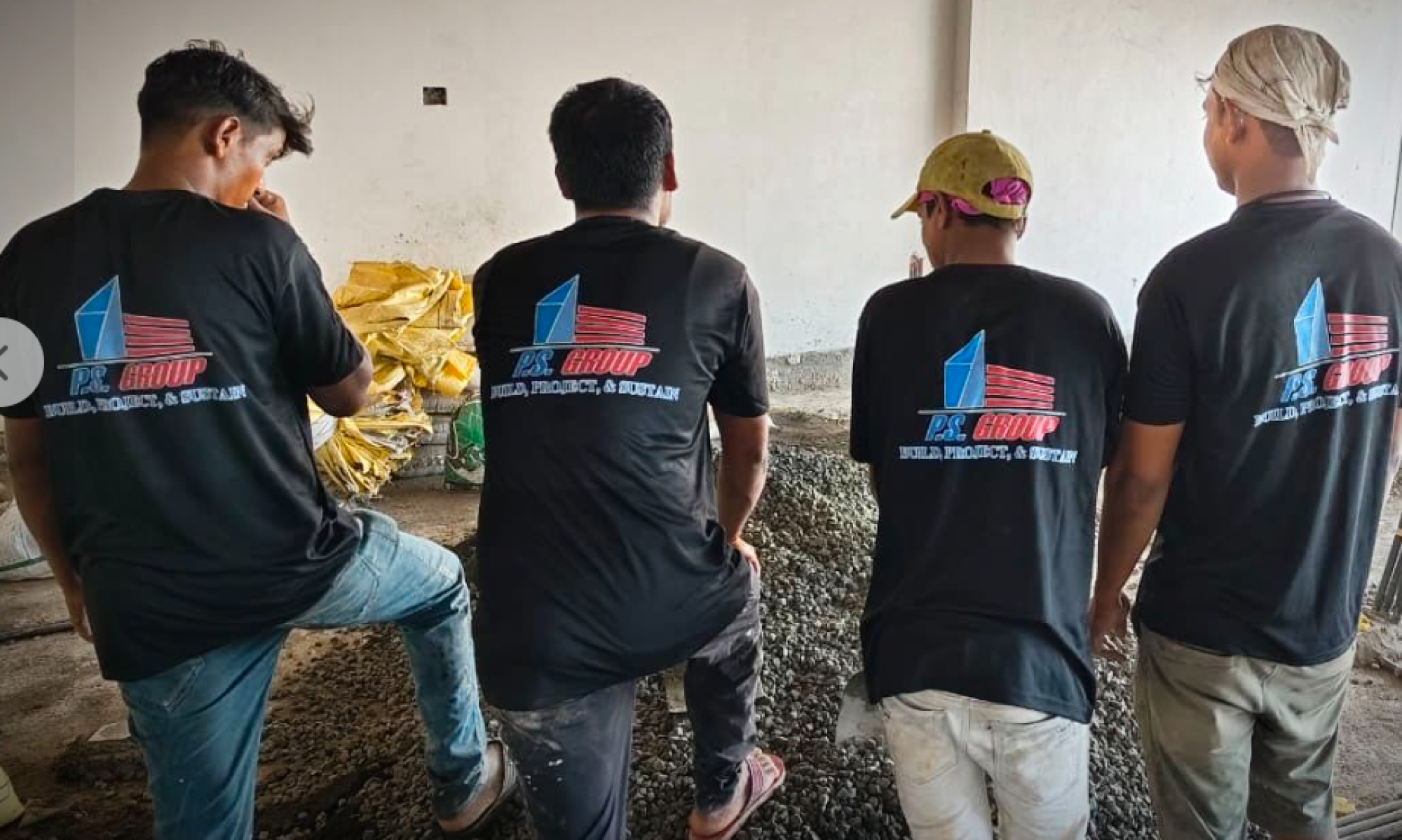
From Bare Shell to Move-In Ready: How PS Design Studio Approaches a Mumbai 2BHK Project

From Bare Shell to Move-In Ready: How PS Design Studio Approaches a Mumbai 2BHK Project

A bare shell 2BHK is the most exciting blank canvas in Mumbai, and also the most deceptive one, because everything looks possible until you find the seepage stain the previous owner painted over. This is a PS Design Studio 2BHK project story: how PS Group (formerly PS Civil) takes a Mumbai flat from bare shell to move-in ready, in the order that actually works.

Most renovation stories you see online start with mood boards and finish with photos. Ours starts with a moisture meter. Here is the full sequence we follow, why the order matters, and what changes between day one and handover.

Step 1: We Scan Before We Sketch

In a bare shell flat, the walls tell you nothing at first glance. Fresh cement plaster hides old leakage paths, and a resale shell often comes with years of patched-up dampness behind a thin coat of paint. So before a single drawing is made, our team maps the flat’s condition: moisture readings across bathroom walls, kitchen shafts, external walls, and terrace-facing corners.

This is the civil-first habit, and it is the single biggest money-saver in Mumbai renovations. If a flat owner had waited and discovered a leaking bathroom shaft after the modular kitchen was installed, the entire platform and cabinet run would have to come apart. Finding the damp patch first means we fix the source, wait for the wall to dry, and only then close it up. If you have a wall that stays damp long after the rains, this earlier guide on how long to wait before repairing damp walls explains the drying logic we apply.

Step 2: Civil Repairs and Waterproofing Before a Single Wardrobe Is Made

Once we know the flat’s condition, the hidden work happens first:

  • Civil repairs. Cracked plaster, hollow-sounding patches, and weak screeds are cut out and rebuilt. Slope correction in bathrooms and balconies matters more in a bare shell than anywhere else, because faulty slopes are the root cause of most standing-water problems later.
  • Waterproofing of wet areas. Bathrooms, kitchen sink areas, and utility balconies get full waterproofing, tested by ponding before tiling. Society committees in Mumbai know this standard well from our waterproofing work at the building level; inside a flat we hold ourselves to the same discipline.
  • Plumbing and electrical rough-in. Every point is decided jointly by the design and civil teams so that the tile breaking never happens after tiling is done.

The coordination between the civil team and the design team is what makes this fast. The designer knows where the shower glass and washing machine will sit, so the waterproofing layer and drain positions are built for the final layout, not adjusted to it later.

Step 3: Interiors That Survive Mumbai Humidity

Only after the flat is dry, sealed, and roughed-in do the visible layers begin: flooring, modular kitchen carcasses, wardrobes, and paint. Material choices are filtered through one question: will this last through ten Mumbai monsoons?

  • Kitchen and wardrobe carcasses in BWP-grade marine plywood, not particle board, because humidity in Mumbai swells cheap boards within two seasons.
  • Cement-based tile adhesives rather than spot-fixing methods for the same reason.
  • Fungus-resistant emulsion paints for walls that face the sea breeze or a damp-prone shaft.
  • Full-height waterproof backing behind every bathroom-adjacent wardrobe, so clothes never pick up that musty smell Mumbai flat owners know too well.

Step 4: A Realistic Timeline, Phased Around Curing and Society Rules

A bare shell 2BHK moves in phases, and the slowest phase is the one you cannot see. Waterproofing needs its full curing window before tiles go on; rushing it is why so many bathroom renovations in Mumbai fail within the first monsoon. Society bye-laws also shape the schedule: restricted working hours, no-noise windows for drilling in the afternoons, and the reality that society lifts and common corridors dictate material delivery timings.

We phase the work so the flat owner can keep living elsewhere with a clear move-in date, or in some cases occupy one bedroom while the rest of the flat progresses. A weekly written update keeps the owner, the society office, and our site team on the same page.

Before and After: What Actually Changed

On the surface, a bare shell becomes a finished 2BHK: level flooring, a modular kitchen in place, fitted wardrobes, fresh paint, lights working. The transformation photos are the fun part, and we share real project walkthroughs on our Instagram page.

But the before-and-after that matters most is invisible: a moisture reading that has dropped to a healthy range, a bathroom that passed a ponding test, drain slopes that carry water instead of holding it. That is the difference between a flat that photographs well in October and a flat that still looks good after three monsoons. Where hidden leakage is suspected in an existing flat before renovation, our leak detection team builds the same evidence base before design begins.

Planning a 2BHK Renovation?

If you are taking possession of a bare shell flat, or renovating a resale 2BHK anywhere in Mumbai, start with the same conversation we start every project with: what is the condition of the walls before we plan what goes on them. Share your floor plan with PS Design Studio or message us directly on WhatsApp. We will walk you through what your flat needs before we show you what it can look like.

#PSGroup #PSCivil #PSDesignStudio #PSWaterproofing #PSLeakDetect #InteriorDesignMumbai #2BHKRenovation #BareShell #FlatRenovationMumbai #MumbaiRenovation #ModularKitchenMumbai #InteriorDesignerMumbai #HousingSocietyMumbai #FlatOwnerMumbai #MumbaiFlats #HomeRenovation #RenovationPlanning #CivilFirstDesign #MumbaiMonsoon #BuildingMaintenance

Why Is My Flat Wall Still Damp Weeks After the Monsoon? A Mumbai Flat Owner’s Guide

Why Walls Stay Damp Weeks After the Rains Stop

The monsoon left Mumbai in late September, but the wall in your flat is still dark, cold to the touch, and smells faintly musty in late October. If you are asking why your flat wall is still damp weeks after the monsoon, this Mumbai flat owner’s guide explains what is actually trapped inside that wall, how to tell harmless surface dampness from real seepage, and when to stop waiting and call for help.

A Mumbai wall does not dry the day the rain stops. Through June, July and August, an external brick-and-plaster wall absorbs rainwater layer by layer, especially on walls facing the western sea breeze and salt-laden air. That water sits deep inside the masonry and works its way out slowly over weeks. A wall that took three months to soak will not dry in three days just because the sky is clear now. Four other things keep the patch alive:

  • Trapped moisture in thick walls: older buildings in areas like Matunga, Dadar and Ghatkopar have 230 mm brick walls that hold a surprising amount of water deep inside.
  • Capillary rise from the ground: if your building’s plinth protection or drainage is weak, moisture keeps climbing up from the foundation, so the damp patch never truly dries no matter how sunny it is outside.
  • Failed internal waterproofing: bathroom or kitchen waterproofing older than ten years allows water into the wall every single day, monsoon or not. The monsoon just makes the symptom louder.
  • Poor ventilation: a closed bedroom with clothes drying inside and no exhaust generates condensation that looks exactly like seepage, particularly on walls behind cupboards and beds.

Is It Surface Dampness or Real Seepage? How a Flat Owner Can Tell

Not every damp patch is a problem. Learn to separate the two.

Surface dampness usually shows up as a patchy, faded area on an external wall. It looks lighter during the day, darker at night, and does not spread much after October. Left alone with decent ventilation, it fades by December or January as the wall finishes drying out. We share simple post-monsoon checks like this regularly on the PS Group Facebook page, where our team answers flat owner questions through the drying season.

Real seepage behaves differently. The patch has visible tide marks or brown rings that keep growing. Paint flakes off in layers rather than fading. The wall feels genuinely wet, not just cool. The patch darkens within hours of the upstairs flat using its bathroom, or after your own shower. A musty smell lingers even when the plaster looks dry. Most telling of all: by the time Diwali lights are up, the patch has not shrunk, it has grown.

One caution before you blame the neighbour: seepage can also travel horizontally along a slab for several metres, so the bathroom causing your wall damp may not be directly above you at all. That is exactly the mistake that turns a small repair into a year-long building dispute.

Two Simple Checks You Can Do This Weekend

  1. The polythene sheet test. Take a square metre of clear plastic sheet or a cut-open polythene bag and tape it airtight over the damp patch. After a day or two, look at it. Droplets of water on the underside of the sheet mean moisture is coming from inside the wall, which points to seepage or trapped construction water. A dry underside with no change means the dampness is likely cosmetic humidity. It costs almost nothing and tells you more than a hundred guesses.
  2. Track the patch for two weeks. Photograph the patch on the same day each week with a phone, keeping the same angle and lighting. If the outline is shrinking week by week, your wall is simply drying. If the outline is spreading rings outward, water is still entering from somewhere and the source is active.

A professional adds a moisture meter and thermal imaging on top of these checks. A moisture map of the wall, wall, ceiling and shared plumbing lines shows exactly how deep the water sits and which direction it has travelled, all without breaking a single tile.

Why Painting Over a Damp Wall Makes It Worse

The most expensive October mistake is booking a painter early. Fresh paint and wall putty form a barrier that seals moisture inside the plaster. Within weeks you see blisters, then peeling, then a patch larger than the one you started with. Meanwhile, trapped dampness quietly corrodes the wall from inside. When you repaint, do it after the wall is verifiably dry, or you are paying to cover a problem rather than fix it. If you want the wall repainted before guests arrive for the season, the dampness check comes first, the paint comes second.

When to Stop Waiting and Call a Professional

Patience with a drying wall is wise, but only up to a point. Call for an inspection if:

  • The patch has not faded even slightly by late November or early December.
  • The damp area sits on a shared wall next to a bathroom, kitchen or terrace above.
  • Paint keeps flaking in the same spot no matter how many times it is redone.
  • The patch is near an electrical point, switchboard or below a bathroom trap, where moisture becomes a safety risk.
  • Your discussion with the upstairs neighbour or the society committee is going nowhere because nobody can agree on where the water comes from.

Where the source turns out to be failed waterproofing rather than trapped monsoon moisture, the fix is a proper bathroom or terrace waterproofing treatment using materials meeting IS 2645 standards, not another round of putty and paint. PS Group (formerly PS Civil) has handled exactly this confused drying-season question across Mumbai since 2007, and the answer is never guesswork: we scan first, prove where the water is coming from, and only then repair.

If you are stuck staring at that patch and wondering whether it needs repair this winter, get it checked before you decide. Send a photo of the wall to our team on WhatsApp or request a moisture inspection through the PS Group contact page, and we will tell you plainly whether your wall needs work now, later, or not at all.

Waiting is free until the source is active. If you missed it, this earlier guide on how long to wait before repairing damp walls after the monsoon covers the timing question in more detail.

#WaterproofingMumbai #LeakDetectionMumbai #FlatOwnerMumbai #HousingSocietyMumbai #BathroomLeakage #SeepageSolution #DampWall #MonsoonDamage #PostMonsoon #MumbaiMonsoon #CooperativeSociety #MumbaiFlats #WaterSeepage #WallDampness #PSGroup #PSWaterproofing #PSCivil #PSLeakDetect #BuildingMaintenance #MumbaiHomes

Society Year-End Repair Planning: What Mumbai Committees Must Decide Before December

Society Year-End Repair Planning: What Mumbai Committees Must Decide Before December

Most Mumbai societies wake up to building repairs in April, when every decent contractor is already booked and the monsoon is a month away, and then pay the price in June. Real society year-end repair planning happens between October and December, when committees still have the time, the dry weather, and the negotiating power to make smart decisions for Mumbai buildings.

If your managing committee is wrapping up its AGM season right now, this is the window to decide what gets repaired next year, in what order, and who does it. PS Group (formerly PS Civil) has watched hundreds of Mumbai housing societies go through this cycle since 2007, and the pattern never changes: the committees that decide before December get quality work at sensible scopes. The ones that decide in April get whatever is left.

1. Why October to December Is the Real Planning Window for Mumbai Societies

Committee decisions for next year’s civil and waterproofing works should be locked in now, for four practical reasons:

  1. The monsoon damage is still fresh. The damp patches, terrace blisters, and plaster cracks you saw in September are documented and visible. By January, dry weather hides them, and by April you are remembering problems instead of seeing them. Our PS Civil team always recommends a post-monsoon survey in October, while the evidence is still on the walls.
  2. Contractors are free to survey properly. A proper structural audit and scope-of-work survey takes site visits and time. Between October and December, engineers can actually give your building attention, not a rushed walkthrough.
  3. You can verify quality in dry months. Repair work executed between November and March cures properly because humidity is low and there is no rain to interrupt. Work done in a hurry in May cures badly and fails in the first monsoon. This is exactly why terrace waterproofing done in winter lasts longer in Mumbai buildings.
  4. Your budget cycle aligns. Sinking fund contributions for the next financial year get decided around the AGM. A repair resolution passed now can be funded properly instead of through an embarrassing emergency collection in peak monsoon, which is how many societies end up choosing the cheapest quote out of panic.

2. What a Year-End Repair Plan for Your Building Must Cover

A repair plan that just says “paint the building and fix the leaks” is not a plan. Before your committee finalises anything, it should have findings on four fronts:

  • Structural audit points. If your building is over 30 years old, BMC rules require a structural audit. Even below that age, spalling concrete, exposed reinforcement, and widening cracks need a professional assessment. Structural repairs decide the safety of everything else you spend on.
  • Waterproofing status. Which areas failed this monsoon: terrace, podium, basement, bathroom shafts, or external walls? Map every leak complaint from the year into one sheet. Three complaints about the same wing parapet is not bad luck, it is one failed detail.
  • Facade and external plaster condition. Hollow-sounding plaster and debonded patches that grew after this monsoon will fall next monsoon. We wrote about what societies must do when external plaster starts falling off a building here.
  • Common areas and services. Staircase treads, compound walls, drainage lines, podium flooring, and pump room seepage. Small items, but committees that skip them end up spending next year’s budget on this year’s leftovers.

3. How to Prioritise When the Sinking Fund Is Not Enough

Almost no Mumbai society has enough in the sinking fund and major repair fund to do everything in one year. So prioritise in this order:

  1. First, anything that is a safety risk. Structural cracks, spalling concrete over entrances and balconies, and loose external plaster above walkways. These are not negotiable and cannot wait for a “better year”.
  2. Second, anything that gets worse by delay. An active terrace leak, a leaking expansion joint, or rising damp in a basement will damage plaster, steel, and electricals every week it is ignored. Repair costs grow with every monsoon that passes over a failed waterproofing layer.
  3. Third, work that protects work. If you plan to paint the building next year, any waterproofing and plaster repair must be finished first, or the paint will bubble and stain within one season and the painting money is wasted.
  4. Last, cosmetic work. Lobby upgrades, compound beautification, and redecorating can slide a year without harming the building.

One request we make to every committee: keep a contingency line in the repair budget, because monsoon surprises in Mumbai are not surprises, they are a schedule. The rules on who is responsible for waterproofing repairs, the society or the flat owner, are also worth settling before the disputes begin.

4. What the Maharashtra Cooperative Societies Act Requires Before You Pass a Repair Resolution

This is the part most committees get wrong. Under the Maharashtra Cooperative Societies Act and the model bye-laws:

  • Major repairs need a general body resolution, not just a committee decision. Check your registered bye-laws for the limit above which general body approval is needed, and pass it in a properly called meeting with minutes on record.
  • Use of the sinking fund has its own procedure. The sinking fund can be spent on structural repairs and heavy maintenance, with a supporting general body resolution on record for the withdrawal.
  • Collect quotations through a transparent process. Get at least three written quotations, table all of them at the general body meeting, and record in the minutes why the selected contractor was chosen. This protects committee members personally when a member later questions the spend.
  • Spend against an approved scope of work, not a verbal understanding. The resolution should annex the scope: areas, method, materials meeting IS 2645 standards for waterproofing, and a flood or ponding test for every completed terrace and bathroom.

5. Seven Questions to Ask Before Approving a Repair Contractor

  1. What exactly is the scope, written down, area by area, with completion stages?
  2. Which method and material system is proposed, and is it appropriate for this building’s age and exposure?
  3. Is a flood test or water ponding test included in the scope for waterproofed areas, and who signs it off?
  4. What is the repair warranty period, in writing, and what is the follow-up process if a leak returns?
  5. How will daily site progress be documented and verified by the society?
  6. What precautions cover residents’ safety, scaffolding, and society property during the work?
  7. What is excluded? The cheapest quotation usually excludes surface preparation, crack filling, or the flood test, and those exclusions are exactly where leaks come back from.

If a contractor cannot answer these seven questions in writing, the quotation is not low, it is incomplete.

Sanjay Parmar, who leads our civil and waterproofing divisions, regularly shares how societies should structure their repair cycle on LinkedIn here, and the PS Group YouTube channel carries site walkthroughs of society repair projects here.

Make December Your Deadline, Not Your Starting Point

By the end of December, your society should have: a post-monsoon defect list, a prioritised repair plan, three written quotations, and a general body resolution on record. Do that, and next year’s repairs happen in the dry season, at sensible scopes, with proper supervision. Leave it to April, and you will be choosing whichever contractor still has dates free, in a hurry, before the first rain.

PS Group helps Mumbai housing societies with structural assessments, post-monsoon surveys, and full repair execution from waterproofing to facade restoration. If your committee is planning next year’s works, book a site visit through our contact page or message us directly on WhatsApp here.

#HousingSocietyMumbai #SocietyMaintenance #SinkingFund #BuildingRepairs #StructuralAudit #YearEndPlanning #AGM #CooperativeSociety #MumbaiSociety #MumbaiMonsoon #BuildingMaintenance #PSGroup #PSCivil #PSWaterproofing #PSLeakDetect #PSDesignStudio #SocietySecretary #RepairPlanning #MumbaiBuildings #MumbaiHousing

Fix Seepage Before You Renovate: The Renovation Order That Saves Mumbai Flat Owners Lakhs

You picked the tiles, finalised the wardrobe design, paid the advance, and six months later your new paint is bubbling because nobody checked the wall behind it for seepage.

This is the single most common renovation mistake in Mumbai flats. Not bad design. Not wrong tile selection. Doing interiors before fixing the building. When you search “fix seepage before renovating Mumbai flat” you will find dozens of threads from flat owners who learnt this the hard way. The renovation looked great for three months, then the dampness came through the new wallpaper, the modular kitchen cabinets started swelling, and the fresh plaster above the bathroom started cracking again.

The problem is not the renovation. The problem is the order.

## Why Doing Interiors First Backfires in Mumbai Flats

Mumbai’s coastal climate means almost every building over 10 years old has some level of moisture trapped in its walls. During the monsoon, that moisture multiplies. Seepage from bathrooms, terrace leaks, inter-flat leakage from upstairs flats, and rising dampness from the ground all push water into walls and ceilings.

When you renovate without addressing this, you are essentially sealing that moisture inside. New plaster, paint, wallpaper, and woodwork trap the dampness. It has nowhere to go. So it finds the weakest point and shows up as paint blisters, fungal patches, and warping wood.

The team at PS Group of Companies (formerly PS Civil) has seen this pattern in hundreds of 2BHK and 3BHK renovations across Mumbai. A family spends months planning their dream home, gets it done, and within one monsoon season the dampness returns through the new finishes.

The fix costs less than the damage. But you have to do it in the right order.

## The Correct Renovation Order: Diagnose, Fix, Repair, Then Design

Here is the sequence PS Group follows when a flat owner comes to us for interior renovation:

Step 1: Diagnose the source of moisture first. Before any design work starts, we recommend a thermal imaging leak detection scan to map every damp area in the flat. This tells you exactly where the water is coming from. Is it the bathroom floor? The external wall? A concealed pipe? The upstairs flat? You need this answer before you decide what to fix. Most renovation contractors skip this step. They see a damp patch, apply a coating over it, and move on. Three months later the damp appears in a different spot because the source was never addressed.

Step 2: Fix the waterproofing and leakage issues. Once you know where the water is coming from, fix it properly. Bathroom waterproofing using materials meeting IS 2645 standards. External wall cracks sealed. Plumber repairing the concealed pipe if needed. If the source is the upstairs flat, the society needs to be involved under the Maharashtra Co-operative Societies Act. This step takes time. Membranes need curing. Injections need to settle. But once it is done, the walls are dry and ready for the next phase.

Step 3: Do the civil repairs. Cracked plaster removed and re-applied. Damaged RCC patched. Wall surfaces levelled. This is the base layer. Every design work that follows depends on a structurally sound, dry surface. Skipping civil repairs to save time means your new interiors sit on compromised walls. The cracks will come through.

Step 4: Then start the interior design. Now you bring in the modular kitchen, wardrobes, false ceiling, paint, and finishes. Everything sits on dry, repaired, waterproofed walls. The monsoon comes and goes. The interiors hold. This is what we call civil-first design at PS Design Studio. It is not a marketing term. It is the only sequence that works in Mumbai’s climate.

## What Happens When You Skip Leak Detection

A flat owner in a Mira Road building called us after spending on a full 2BHK renovation. New bathroom tiles, fresh paint, modular wardrobes, false ceiling. Three months into the monsoon, brown stains appeared on the bedroom ceiling. The paint started peeling near the bathroom wall. The wardrobe backing panel started warping.

A thermal imaging scan revealed moisture travelling from the bathroom through a hairline gap in the waterproofing layer along the floor joint and into the bedroom wall. The old waterproofing had failed years before the renovation, but nobody checked.

The renovation had to be partially dismantled. The bathroom floor tiles were removed, the waterproofing redone, and then the finishes restored. The flat owner paid for the renovation twice.

If the scan had been done before the renovation, the fix would have been a fraction of what it eventually cost. This is why we always recommend a leak detection scan before starting any interior work. It takes a few hours and it can save you from redoing your entire renovation.

## How PS Design Studio Coordinates With Other PS Group Teams

When you hire PS Group for your flat renovation, you are not just getting an interior designer. The design studio works alongside the waterproofing team and the leak detection team as part of the same process.

The sequence is straightforward. PS Leak Detect runs a moisture scan first. PS Waterproofing handles the bathroom and terrace repairs. PS Civil does the plaster and structural repairs. Then PS Design Studio starts the interior work. Every team hands over to the next with a clear report. The designer knows the walls are dry. The waterproofing team knows the surfaces are ready for finishes. There is no guessing about what is behind the wall.

This is rare in Mumbai. Most interior designers subcontract waterproofing to a separate company they have no control over. When the waterproofing fails, the designer blames the waterproofing contractor, the contractor blames the building, and the flat owner is stuck with peeling walls. At PS Group, one team owns the whole sequence. If something goes wrong, there is one phone number to call.

## Questions to Ask Before You Start Your Mumbai Flat Renovation

1. Will a leak detection scan be done before the work starts?
2. Who handles the waterproofing: your team or a subcontractor?
3. What happens if damp appears after the renovation is complete?
4. What is the sequence of work: civil first or interiors first?
5. How do you test that walls are dry before applying finishes?

If the answers are vague, that is your warning sign. A designer who cannot answer these questions confidently is planning to paint over potential seepage. You can see some of our completed renovation and design projects on our gallery page, or watch real project walkthroughs on the PS Group YouTube channel. Follow our day-to-day site work on Instagram for more Mumbai renovation tips.

## The Bottom Line

Renovating a Mumbai flat without fixing seepage first is like painting a wet canvas. It looks fine until it does not. The monsoon does not care how much you spent on the interiors. Do it in the right order: diagnose, fix leaks, do civil repairs, then design. That sequence is the difference between a renovation that lasts ten years and one that needs redoing after one monsoon.

Ready to start your flat renovation the right way? Get in touch with PS Group for a combined leak detection and design consultation, or message us directly on WhatsApp.

#WaterproofingMumbai #LeakDetectionMumbai #MumbaiRenovation #SeepageSolution #FlatRenovationMumbai #InteriorDesignMumbai #2BHKRenovationMumbai #CivilFirstDesign #RenovationMistakesMumbai #BathroomLeakage #MumbaiMonsoon #MonsoonPrep #BuildingMaintenance #HousingSocietyMumbai #FlatOwnerMumbai #PSGroup #PSDesignStudio #PSCivil #PSWaterproofing #PSLeakDetect

When Is the Best Time to Waterproof a Building in Mumbai After the Monsoon?

When Is the Best Time to Waterproof a Building in Mumbai After the Monsoon?

Your building leaked all through July and August, and now the committee wants to fix it in September. That is the worst time to start.

If you are a housing society secretary or managing committee member in Mumbai, you are probably fielding complaints about damp walls, peeling paint, and ceiling patches right now. The instinct is to call a contractor immediately and get the terrace or walls sealed before the next rain. But here is the truth most contractors will not tell you: the best time to waterproof a building in Mumbai after the monsoon is between October and February, when surfaces are dry enough for materials to bond properly. Starting in September, while walls are still holding moisture, almost guarantees the waterproofing will fail before the next monsoon even arrives.

At PS Group (formerly PS Civil), we have been doing waterproofing and civil repairs across Mumbai since 2007, and we have seen the same pattern repeat every year. Societies rush into repairs in September, the work fails by the following June, and the committee ends up paying twice for the same terrace. This guide explains why timing matters so much, what your society should be doing right now in September, and how to plan the actual waterproofing work for the correct window so it lasts for years instead of months.

Why You Cannot Waterproof Effectively During the Monsoon

Waterproofing is not paint. It is a system of membranes, coatings, and sealants that chemically bond to the substrate beneath them. For that bond to form, the surface needs to be clean, dry, and stable. During the Mumbai monsoon, which runs from June through September, none of those conditions exist.

Think about what happens to your terrace slab during three months of continuous rain. The concrete absorbs water. Hairline cracks widen. The surface develops a thin layer of algae and moss. The relative humidity stays above 85% for weeks at a stretch. If you apply a waterproofing membrane on top of that, the membrane sticks to the wet, dirty surface but never truly bonds. The first hot day after the monsoon, trapped moisture inside the slab turns to vapour, pushes outward, and blisters the membrane from below. By the time the next monsoon arrives, water is seeping through again.

This is not a workmanship problem. It is a physics problem. No contractor, no matter how skilled, can make waterproofing materials cure correctly on a wet substrate during high humidity. PS Group has walked away from September repair requests because we know the result will be a callback within six months. The honest answer is: wait for the dry window.

The October to February Window: Why It Works

Mumbai’s monsoon typically withdraws by the third week of September. From October onward, humidity drops, temperatures moderate, and the Arabian Sea breeze loses its moisture load. This creates the ideal conditions for waterproofing application:

  1. Surface moisture evaporates. Terrace slabs, external walls, and parapet surfaces need 15 to 20 dry days after the last significant rainfall before they are ready for membrane application. A simple test: tape a clear plastic sheet to the surface overnight. If condensation appears underneath in the morning, the slab is still too wet.
  2. Humidity allows proper curing. Most waterproofing membranes meeting IS 2645 standards require 24 to 72 hours of curing time at moderate humidity. October through February gives you reliable dry spells long enough for full cure.
  3. Temperature is optimal. Extreme heat (March to May) can cause rapid surface drying that traps moisture beneath. The cooler months give a slower, deeper cure.
  4. Wind conditions are stable. Application of liquid membranes and grouting compounds is safer and more precise in calm, dry weather.

November and December are the sweet spot. The surface has had 6 to 8 weeks of dry weather, the humidity is consistently low, and you have a comfortable runway before the pre-monsoon heat begins in March. If your society can schedule terrace waterproofing in November, you are giving the system the best possible chance to bond and last.

What Your Society Should Be Doing in September Instead

September is not a wasted month. In fact, it is the most important month in the annual waterproofing cycle, because this is when you do the groundwork that makes the October to February window productive. Here is what your managing committee should be doing right now:

1. Conduct a Full Building Damage Assessment

Walk every floor. Photograph every damp patch, every peeling section of plaster, every crack in the parapet, every stain on the ceiling. Tag each issue with its location, approximate size, and whether it appeared this monsoon or has been recurring for years. Recurring leaks are a red flag. They usually mean previous waterproofing was applied incorrectly or the source was never properly diagnosed. If you have recurring inter-flat leakage, you need leak detection before any waterproofing work begins. Fixing the wrong area is the most expensive mistake a society can make.

2. Document Everything for the AGM

The annual general meeting is where repair budgets get approved. If you walk in with a vague “we need to fix the terrace,” the committee will argue for weeks. If you walk in with a documented building condition report, photographs, and a prioritised list of problem areas, the decision gets made in one meeting. This is also the time to check whether your building has received any BMC notices for structural repairs or unsafe conditions. Ignoring a BMC notice has legal consequences under the Maharashtra Municipal Corporation Act, and the longer you wait, the worse the fines get. If your building has structural cracks or spalling concrete alongside the waterproofing issues, you may need civil repair work done in the same project.

3. Call Contractors for Site Visits in Late September

Do not wait until October to start calling contractors. By October, every building in Mumbai is trying to book the same handful of experienced waterproofing teams, and the good ones get booked up by late November. Call two or three contractors in the last week of September, have them inspect the site, and ask for written scopes of work. Do not accept verbal estimates over the phone. A proper waterproofing quote should include:

  • The exact areas to be treated, measured in square feet
  • The specific system being proposed (membrane type, number of coats, reinforcement if applicable)
  • Surface preparation steps (cleaning, crack filling, hacking if needed)
  • Whether a flood test is included before handover
  • The warranty period and what it covers
  • The materials being used and whether they meet IS 2645 standards

If a contractor gives you a quote without visiting the site, does not specify the system or materials, or cannot explain what surface preparation they will do, cross them off the list. The cheapest quote is almost always the most expensive mistake in the long run, because you will be redoing the work in two years instead of getting five to seven years of protection.

4. Check Your AMC Renewal Status

If your society has an annual maintenance contract for waterproofing or building upkeep, September is when you should review it. Check what was covered last year, what work was actually done, and whether the recurring problems you are documenting now were supposed to be handled under the AMC. If the AMC is expiring soon, this is the time to renegotiate terms or switch providers. Do not wait for the contract to lapse and then scramble in November.

Why Diagnosis Must Come Before Waterproofing

This is the step most societies skip, and it is the single biggest reason waterproofing fails. You see a damp patch on your bedroom wall and assume it is coming from the terrace. You waterproof the terrace. The damp patch returns next monsoon. Why? Because the actual source was a concealed plumbing leak inside the wall, or seepage from the external wall joint, not the terrace at all.

Before you spend a rupee on waterproofing, you need to know exactly where the water is entering. At PS Group, we use thermal imaging and moisture mapping to trace water ingress to its source without breaking a single tile. This is what our PS Leak Detect division does. A proper diagnosis takes a few hours and costs a fraction of what a failed waterproofing job costs. It tells you whether you need terrace waterproofing, bathroom sealing, external wall treatment, or plumbing repair. Sometimes the answer is all four, but you need to know before you sign a contract.

September is the perfect time to schedule this diagnosis. The leaks are still active, which makes thermal imaging more accurate. By the time the surface dries out in October, the thermal signature fades and detection becomes harder. So use September to find the problem, October to February to fix it.

The Full Annual Waterproofing Calendar for Mumbai Societies

Here is how your society should think about waterproofing across the year:

  1. January to March: Execute waterproofing and civil repairs during the dry window. Schedule flood tests and quality checks before handover.
  2. April to May: Pre-monsoon inspection. Check terrace slopes, clean drain outlets, inspect parapet joints, and apply temporary sealants if needed. This is high urgency as the monsoon approaches.
  3. June to August: Emergency response phase. Patch repairs only. Document all new leaks and damage. Do not attempt major waterproofing during active monsoon.
  4. September: Transition month. Full building assessment, leak diagnosis, contractor site visits, AMC review, AGM preparation.
  5. October to December: Primary waterproofing and civil repair window. Execute permanent solutions while conditions are optimal.

Following this calendar means you are always one step ahead of the monsoon instead of reacting to it. The societies that plan this way spend less on repairs over five years than societies that do emergency fixes every August.

Common Mistakes Societies Make in September

Before we wrap up, here are the mistakes we see most often when committees try to rush repairs in September:

  • Applying waterproofing on wet surfaces. The membrane looks fine for a month, then blisters and peels. You have wasted the entire budget.
  • Skipping diagnosis. The committee assumes the source of the leak and directs the contractor to fix that area. The leak comes back because the real source was elsewhere.
  • Choosing the lowest quote without checking scope. A quote that is 40% cheaper than others usually skips surface preparation, uses inferior materials, or excludes the flood test. You pay for it in failed work within two years.
  • Not documenting damage while it is visible. Once the walls dry in October, the evidence of this monsoon’s damage fades. Photograph everything now while the stains, cracks, and damp patches are clearly visible.
  • Waiting until October to call contractors. By then, the booking rush has started and you may not get your preferred contractor until December, cutting your dry window short.

What to Do Right Now

If your building leaked this monsoon, do not panic and do not rush. Here is your September action plan:

  1. Walk the building and photograph every sign of water damage
  2. Call a professional leak detection team to diagnose the sources while leaks are still active
  3. Invite two or three waterproofing contractors for site visits in the last week of September
  4. Prepare a building condition report for your next AGM with prioritised repair areas
  5. Schedule the actual waterproofing work for October to February, not before

PS Group has been helping Mumbai housing societies with waterproofing, leak detection, civil repairs, and interior design since 2007. We handle the full building lifecycle, which means we can diagnose the problem, repair the structure, and waterproof the surface as one coordinated project instead of three separate contractor headaches.

You can see some of our completed society projects in our gallery, or check out our YouTube channel for videos explaining common waterproofing and civil repair problems and how we solve them.

Ready to get your building assessed before the dry window opens? Contact PS Group for a site visit, or send us a message directly on WhatsApp. We will inspect your building, diagnose the real sources of leakage, and give you a written scope of work so your committee can plan with confidence.

#WaterproofingMumbai #MumbaiMonsoon #PostMonsoonRepair #BuildingMaintenance #HousingSocietyMumbai #TerraceWaterproofing #MonsoonPrep #Waterproofing #LeakageSolution #SeepageSolution #CooperativeSociety #FlatOwnerMumbai #PSGroup #PSWaterproofing #PSLeakDetect #PSCivil #MumbaiHousingSociety #AMCRenewal #BuildingRepair #AnnualMaintenance

Why Your Basement Floods During Monsoon (And What You Can Do Right Now)

Your basement is wet again, and it’s only July — the monsoon has three months left to go.

Basement flooding during Mumbai’s monsoon isn’t bad luck. It’s a structural problem you can fix, but you need to act now before August and September hit. Here’s exactly what’s happening and what to do.

## Why Basements Flood in Mumbai

Mumbai basements flood because of three simultaneous forces:

**1. Hydrostatic Pressure from Groundwater**

During monsoon, the water table in Mumbai rises 8–12 feet. This creates immense pressure against your basement walls — the soil around your foundation literally pushes water through cracks, joints, and porous concrete. Your basement sits below this rising water level, so pressure pushes inward constantly.

**2. Inadequate Waterproofing Membrane**

Most older buildings in Mumbai were built without proper basement waterproofing. Even newer ones often have membrane systems that degrade after 10–15 years. Cracks form from settling, concrete deteriorates, and water finds every weak point.

**3. Poor or Blocked Drainage**

If your building has a sump or drainage system, it’s likely either undersized for monsoon volume or choked with silt and debris. BMC-level flooding in your area compounds this — when street-level sewers back up, the pressure reverses into your basement.

## What You Can Do Right Now (Before August Rains Peak)

**Step 1: Clear Your Drainage System**

If your basement has a sump or drainage pit, check it this week. Remove silt, dead leaves, and debris. If there’s a pump, test it — make sure it runs and isn’t clogged. This alone can reduce flooding by 40–60%.

**Step 2: Seal Visible Cracks and Weeping Joints**

Walk your basement walls with a torch. Look for hairline cracks or weeping (water oozing from joints). Small cracks can be sealed with hydraulic cement or PS Group approved injection grout — a temporary hold until you do proper waterproofing. This stops water immediately.

**Step 3: Create a Temporary Barrier**

If you’re expecting heavy rain this week, apply a water-resistant coating or sealant to the inside of basement walls as a stopgap. It won’t solve the root problem, but it buys you time and redirects minor seepage toward drainage points instead of spreading across the floor.

**Step 4: Elevate Critical Items**

Move electrical boxes, HVAC units, and valuable items 3–4 feet up or to shelving. If your basement floods, you want the damage contained to non-critical areas.

## The Real Fix (For After Monsoon)

Temporary measures hold you through July and August, but they don’t solve the core problem. Once monsoon ends (September/October), you need permanent basement waterproofing:

– **External waterproofing membrane** on the foundation walls (most effective, prevents hydrostatic pressure at the source)
– **Interior sealant system** to reduce internal seepage (faster, cheaper, but less comprehensive)
– **Proper sump and drainage design** to channel water OUT instead of INTO the basement
– **Crack injection and concrete repair** to restore structural integrity

PS Group (formerly PS Civil) has completed 60+ basement waterproofing projects in Mumbai housing societies and commercial buildings. We use external membrane systems tested to withstand 15+ feet of water pressure — exactly what your basement faces during monsoon.

Get a site inspection and waterproofing plan from PS Group — contact us or message on WhatsApp: +91 9768 416 600.

## The Mumbai Monsoon Truth

Your basement floods because of the geography and the rain — but the solution is engineering, not accepting it. Three months of monsoon is coming. If your basement flooded last year, it will flood again this year unless you act now.

For immediate emergency help during heavy rains, reach out to PS Group Waterproofing. We do emergency monsoon response sealing and temporary flood prevention. For permanent solutions starting in October, see our waterproofing services.

#BasementFlooding #MumbaiMonsoon #BasementWaterproofing #WaterproofingMumbai #HousingSocietyMumbai #MonsoonPrep #LeakageRepair #CivilRepair #PSWaterproofing #PSGroup #PSCivil #BuildingMaintenance #MonsoonsInMumbai #WaterproofingContractorMumbai #FoundationRepair #GroundwaterPressure #DrainageSolution #EmergencyWaterproofing #MumbaiBuildings #RealEstateMaintenance #HousingSocietyTips

KABU CLEAR COAT: Can You Really Waterproof a Terrace Without Removing the Existing Tiles?

# KABU CLEAR COAT: Can You Really Waterproof a Terrace Without Removing the Existing Tiles?

Your terrace leaks. Your contractor wants Rs X lakh to rip out every tile, reset the slope, re-tile, and re-waterproof. You think: “There has to be another way.” And honestly, for many Mumbai flat owners, there is.

## The Problem: Full Tile Removal Is Expensive and Invasive

When you call a contractor about terrace leakage, the default answer is: “Remove all tiles, repair substrate, reapply membrane, reset slope, re-tile. 4-6 weeks. Heavy cost.”

What they’re not telling you: **if your tiles are structurally sound and your slope is OK, you can waterproof over them.** You don’t need to break a single tile.

The reason contractors don’t offer this first is simple — it’s less profitable and requires a different material than traditional membrane systems. But for flat owners in Mumbai, this is often the smarter choice.

## Why Transparent Coatings Work (And Why Most Contractors Won’t Tell You)

A transparent waterproofing coating (like the KABU clear coat system that PS Group uses) works on a completely different principle than membrane waterproofing.

Instead of creating a separate barrier layer **under** the tiles, it soaks into the tile surface and the joints, creating a hydrophobic (water-repelling) matrix **throughout** the tile and grout network. Water can’t penetrate because the material itself resists water at the molecular level.

Think of it like Scotchgard for your terrace. It’s not a patch — it’s a treatment.

### Why This Works on Existing Tiles

– **Capillary action is blocked.** Water can’t creep through the grout lines or micro-pores in the tile.
– **No substrate prep needed.** As long as tiles are structurally sound, the coating adheres directly.
– **Hairline cracks in grout are sealed.** The coating flows into micro-cracks and hardens there.
– **UV stable formulation.** Mumbai’s intense sun won’t break down a quality clear coat in 2-3 years like cheaper options.

The KABU system that PS Group recommends is specifically engineered for this — it’s not a DIY sealer you buy at the hardware store.

## The Real Conditions: When No-Removal Works, and When It Doesn’t

**This approach works if:**

– Your tiles are NOT tented or lifted (no hollow spaces underneath).
– Your grout joints are intact (not deeply cracked or missing).
– Your terrace has adequate slope or water is not pooling permanently.
– The root cause of leakage is NOT structural settlement (which requires fixing the slope).

**This approach WON’T work if:**

– Tiles are already moving or cracked across the surface.
– There’s active spalling (concrete crumbling) under the tiles.
– Water is pooling in flat areas because the slope has shifted.
– The leak is coming from a structural crack in the RCC slab itself.

This is why PS Group insists on a **thermal imaging leak detection scan before you commit to any waterproofing method**. We need to know exactly what’s causing the leak. Is it surface seepage (the coating fixes it) or structural failure (you need civil repair first)?

## How KABU Clear Coat Is Applied (No Mess, No Downtime)

1. **Cleaning.** High-pressure wash to remove dirt, algae, and loose material. Terrace is left to dry (4-6 hours in Mumbai sun).

2. **Inspection.** Visual check for tented tiles, missing grout, or active cracks. Any problem areas are flagged — they may need local tile replacement first.

3. **Coating application.** The KABU clear coat is roller-applied in 2-3 thin, even coats. It’s transparent, so you see the tiles underneath. No messy membrane layers.

4. **Curing.** 24 hours minimum before foot traffic. 72 hours before heavy water exposure (monsoon).

5. **Flood test.** Optional but recommended — PS Group can do a flood test to verify the seal before monsoon.

**Total time: 2-3 days.** Your terrace is still usable immediately after. No living room renovations, no displaced furniture, no 6-week construction site in your building.

## Cost Comparison: Why This Matters for Your Budget

We don’t quote costs here — every terrace is different. But here’s what affects the price:

– **Area of terrace.** Obvious.
– **Condition of tiles and grout.** If 10% of tiles need replacement before coating, that adds cost.
– **Access difficulty.** Fourth-floor terrace vs. ground-floor terrace.
– **Flood test and warranty.** A warranty with a post-monsoon inspection costs more than no warranty.

What matters: **Get a written quote that specifies:**
– What KABU system is being used (not a cheaper knockoff).
– Whether flood test is included.
– Warranty period (KABU-backed coatings typically warrant 5-7 years against water ingress).
– What happens if it fails during warranty.

## When to Combine KABU With Civil Repair

Here’s the reality: Sometimes coating alone isn’t enough.

If thermal imaging shows water is entering because **the terrace slope has settled** (so water pools in the corner), the coating will slow the leak but not stop it forever. Over time, water will find its way in.

In these cases, PS Group recommends a combined approach:

– **RCC repair** to reset the slope and fill any structural voids (PS Civil handles this).
– **Then** apply KABU clear coat for long-term surface protection.

This is more expensive upfront but saves you from the same leak returning in 2 years. It’s why PS Group does a thermal imaging scan **before** recommending any solution — not after.

## The Mumbai Monsoon Angle

You have 3-4 months before monsoon (June-September). If your terrace currently leaks in heavy rain, a transparent coating applied today will protect you this year.

But there’s a timeline: **Don’t wait until June end.** The coating needs proper curing time, and weather conditions matter. A professional waterproofing contractor will not apply coatings in active rain or when forecasts show heavy monsoon within 48 hours.

If your terrace is currently leaking, get a thermal imaging scan done **this week**. You’ll know exactly what you’re dealing with and can plan the solution (coating only vs. coating + civil repair) before the monsoon rush hits and contractors are fully booked.

## Next Steps: What to Do Right Now

1. **Call PS Group for a thermal imaging leak detection scan.** This tells you the exact source of the leak and whether coating alone will work. It costs far less than guessing and applying the wrong solution.

2. **Get a written scope and quote** that specifies KABU clear coat, not a cheaper sealer.

3. **Ask about flood testing** and warranty options.

4. **Schedule application before mid-May** if possible (before heavy monsoon rains begin — timing matters).

A terrace doesn’t have to be a construction site to be fixed. Sometimes, the smartest solution is the simplest one.

**Ready to explore waterproofing without removing tiles?** Contact PS Group for a free thermal imaging scan and written quote. WhatsApp: https://wa.me/919768416600 | Phone: tel:+919768416600 | Learn more: https://pscivil.com/index.php?page=waterproofing

—

## Related Reading

– [PS Leak Detect: How to Find Where Your Terrace Leaks Without Breaking Tiles](https://pscivil.com/index.php?page=leakdetect)
– [Why Your Terrace Waterproofing Fails (And What Actually Works in Mumbai)](internal link to another post)
– [Your Society’s Pre-Monsoon Checklist: What Your Committee Should Inspect](internal link)

—

#WaterproofingMumbai #TerraceWaterproofing #LeakSolution #MumbaiMonsoon #FlatOwnerTips #HousingSocietyMaintenance #NoTileRemoval #ThermalImaging #PSGroup #PSWaterproofing #WaterproofingWithoutRemovingTiles #MumbaiConstruction #BuildingMaintenance #RainySeasonPrep #FlatRepair #TerraceLeak #MonsoonPrep #BuildingRepair #InteriorFixing #ConstructionMumbai #PSCivil #LeakProofing #WaterDamageRepair #StructuralRepair #BuildingCare

PS Group Is Looking to Collaborate: A Message to Mumbai’s Architects, PMCs, and Developers

If you’re an architect, project management consultant, or developer building housing projects in Mumbai, you know the two biggest cost and timeline killers: waterproofing failures and structural repairs that weren’t caught early.

PS Group (formerly PS Civil) has spent nearly 40 years solving exactly these problems for Mumbai housing societies. We’ve completed 2,000+ projects. We’ve scanned 800+ building sites. We know what works in the Arabian Sea salt air, the monsoon rains, and the humidity that rots concrete from the inside.

We’re now opening our doors to architects, PMCs, and developers who want to build once and build right.

## Why Developers and Architects Need a Specialist Partner

You manage timelines. You manage budgets. You manage stakeholder expectations.

Waterproofing and structural repairs are not your core expertise — and they shouldn’t be. But when a developer hands over a project without proper moisture protection, or when the PMC cuts corners on concrete quality, the owner suffers. The project reputation suffers. Your referrals suffer.

The answer isn’t to do it yourself. The answer is a partner who takes that responsibility completely off your shoulders.

## What PS Group Brings to Your Projects

**Preventive waterproofing that lasts.** We don’t patch. We use tested membranes, PU injection grouting, and application methods proven in Mumbai’s climate. We flood-test every major waterproofed area before handover.

**Structural integrity checks before it’s too late.** Our thermal imaging and moisture mapping catch hidden damage in concrete before it becomes expensive. For new construction, we identify RCC pouring defects, spalling risk, and substrate prep issues early — when they’re cheap to fix.

**Transparent scope and pricing.** You get a detailed written scope, material specifications, and a fixed timeline. No surprises mid-project.

**On-time, every time.** We understand developer and PMC schedules. We don’t delay your handovers.

**Authorised applicators for premium materials.** PS Group is now an authorised KABU Waterproofing applicator. That means we use globally-tested products applied to international standards — something you can confidently market to buyers.

## How to Work With Us

We’re looking to partner with:

– **Architects** planning new housing projects who want waterproofing and durability built into the design, not bolted on later.
– **PMCs** managing multi-phase construction or renovation projects who need reliable subcontractors for waterproofing and civil repair work.
– **Developers** building housing societies, office towers, or commercial properties in Mumbai where climate and durability matter.

For serious project inquiries, reach out to **Sanjay Parmar** directly on LinkedIn: https://www.linkedin.com/in/sanjay-parmar-998515229/

Or call us: +919768416600 / WhatsApp: https://wa.me/919768416600

## A Track Record That Speaks

2,000+ completed projects. 800+ building site scans. 40+ years of combined expertise. We’ve waterproofed luxury flat complexes, heritage building restorations, corporate offices, and everything in between.

You can see our work in our gallery: https://pscivil.com/index.php?page=gallery

## Let’s Build Mumbai Right

Projects fail not because of big mistakes — they fail because small issues compound. A waterproofing membrane that wasn’t flood-tested. A concrete weakness that wasn’t caught. A design that didn’t account for Mumbai’s unique climate.

PS Group exists to catch those. Let’s work together.

—

**Ready to collaborate?** Contact Sanjay Parmar on LinkedIn or call us on WhatsApp to discuss your next project.

#PSGroup #PSCivil #WaterproofingMumbai #CivilRepairMumbai #ArchitectureCollab #DeveloperPartners #PMCPartners #HousingMumbai #BuildingMaintenanceMumbai #MumbaiConstruction #ConstructionPartner #WaterproofingContractor #StructuralRepair #MumbaiRealEstate #ProjectManagement #DevelopersMumbai #ArchitectsMumbai #PSGroupMumbai #MumbaiBuilding #BuildOnceBuildRight #CooperativeSociety #ConstructionQuality #IndianConstruction

Create your own website, free on WordPress.com.Create your own website.
Start free